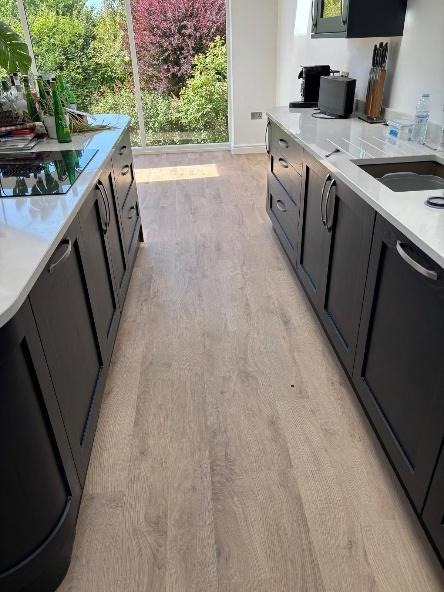
Dealing with Lignite contamination in a new screed – Kitchen / Diner, Oxfordshire

Project Overview
- Location: Oxfordshire (local residential customer)
- Scope: Supply and installation of LVT in a newly renovated kitchen/diner within a recent extension
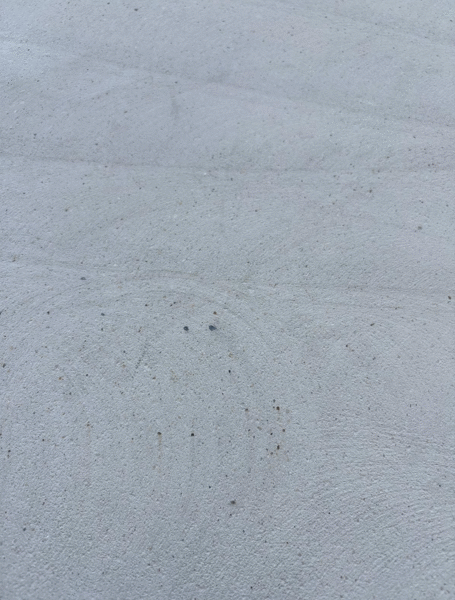
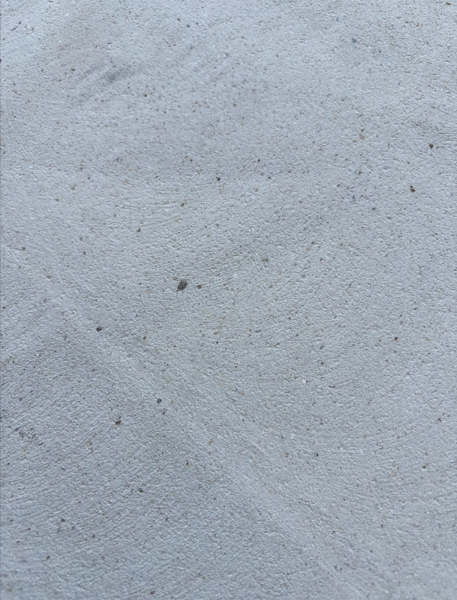
- Challenge: Lignite contamination discovered within the builder’s screed, requiring additional subfloor treatment and drying time before installation could proceed
Background
We were contacted by a local customer who had recently completed an extension and wanted a new LVT floor in his kitchen/diner. At first glance, this appeared to be a straightforward job:
- New builder’s screed in place
- Typical levels of site contamination (dust, minor plaster/paint traces)
- No obvious signs of major subfloor issues
We carried out our site survey, provided a detailed quote for floor preparation and LVT installation, and once accepted, ordered materials and scheduled the work.
The Issue: Hidden Lignite in the Screed
When our team began the proper preparation process, it quickly became clear that this was not just a standard “clean and level” job.
Our Standard Subfloor Preparation Process
On new screeds, our typical process is:
- Mechanical grinding
- To remove laitance (the weak, dusty surface layer that forms as screed cures)
- To remove surface contamination and open the pores of the screed for good adhesion
- Thorough vacuuming and inspection
- To ensure a clean, sound substrate before any primers or smoothing compounds are applied
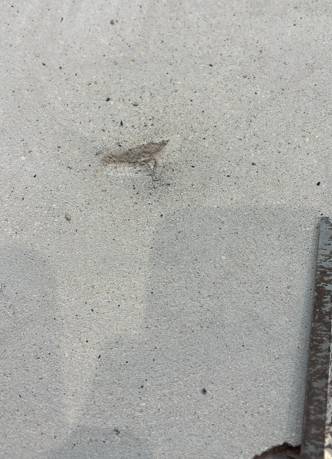
During this stage, after grinding and vacuuming, we identified lignite particles embedded in the top of the screed.
Why Lignite Is a Problem
Lignite is a soft, coal-like material that can sometimes be present in aggregates used in building products. In a subfloor, it is problematic because it is:
- Moisture-sensitive – it can absorb and release moisture over time
- Structurally weak – it can break down under load or when exposed to moisture from adhesives and levelling compounds
- A potential cause of localised failure in the smoothing compound and adhesive, leading to movement telegraphing into the LVT finish
If left untreated, the floor would have been built on a weak, moisture-sensitive base, risking premature failure.
The Solution: Encapsulation and Controlled Drying
Once lignite was identified, our priority was to stabilise the substrate and ensure a sound, long-lasting base for the LVT.
Step 1 – Allow the Screed to Dry
- Lignite is moisture-sensitive, and the screed itself needed to reach an acceptable moisture content before any chemical treatment.
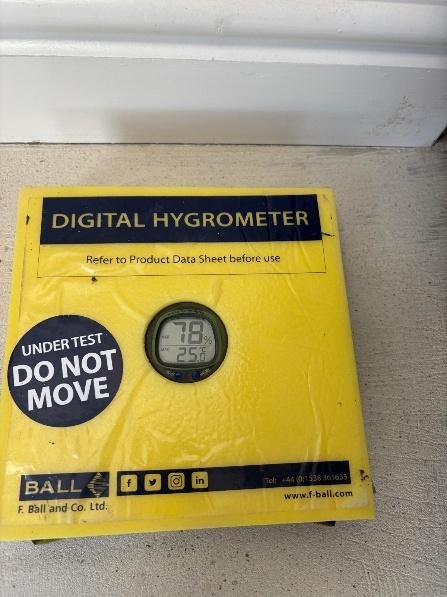
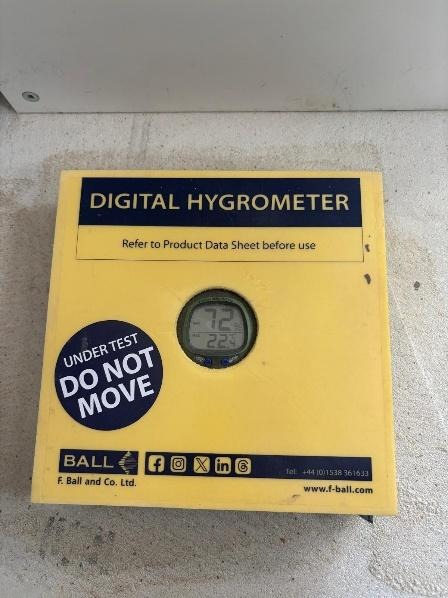
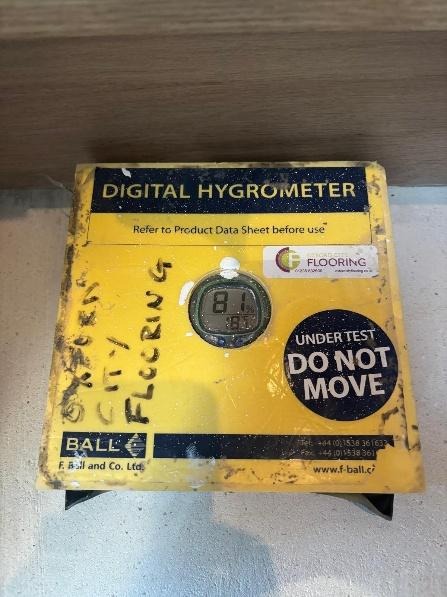
- We used a F-Ball Hygrometer moisture meter to monitor the screed over time.
- This drying period took approximately two weeks, which meant we had to pause the job and reschedule the installation for a later date.
This inevitably impacted both the customer’s timeline and our own schedule, but it was essential to avoid long-term problems.
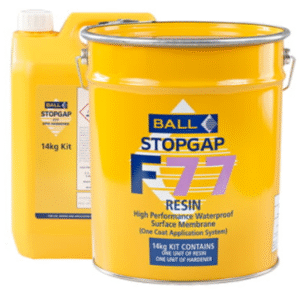
Step 2 – Encapsulate the Lignite with F-Ball F77
Once moisture readings were within acceptable limits, we treated the affected areas with F-Ball F77:
- F77 is a high-performance Waterproof Surface Membrane Application System (DPM)
- Reduce and stabilise residual surface moisture
- Encapsulate minor contaminants and provide a sealed, consistent surface for subsequent layers
In this case, F77 was used to:
- Bind and encapsulate the lignite particles, preventing them from absorbing moisture or breaking down
- Create a stable, sealed surface for the smoothing compound to adhere to
Application followed the manufacturer’s instructions for mixing, coverage and drying times.
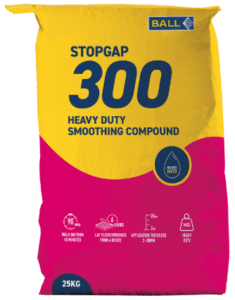
Step 3 – Level with F-Ball 300 Smoothing Compound
After F77 had cured, we applied F-Ball 300 smoothing compound to:
- Create a flat, even surface suitable for LVT
- Build up minor imperfections left after grinding
F-Ball 300 was mixed and applied in line with technical data sheets, including correct water ratios, pot life and curing times.
Only once this system had fully cured and moisture readings were re-checked did we proceed to install the LVT.
F-Ball STOPGAP F77 One-Coat High Performance Waterproof Surface Membrane Application System
 by F. Ball
- Two Part Epoxy Resin System
- Provides A Waterproof Surface Membrane
- Pigmented Black For Visual Coverage Control
F-Ball STOPGAP 300 Heavy-Duty Floor Smoothing Compound 25kg
 by F. Ball
- Fast Drying
- Excellent Self-levelling Properties
- Protein Free
- Application Thickness From 2-20mm
Impact on the Project
Discovering lignite and waiting for the screed to dry meant:
- The job could not be completed within the original timeframe.
- We had to reschedule the installation, which impacted:
- The customer’s use of their new kitchen/diner
- Our own workflow and planning
We explained the issue clearly to the customer, showed them the contamination and moisture readings, and agreed on a revised programme. The alternative – laying the floor on a compromised subfloor – would have risked:
- Premature failure of the LVT installation
- Costly remedial works later
- Disputes over workmanship when the root cause was the subfloor
Key Takeaways
- New screeds are not automatically “ready to go.” Surface laitance and hidden contaminants can undermine a floor build-up if not properly addressed.
- Grinding and inspection are critical. Mechanical grinding exposes the true condition of the screed and allows us to identify issues like lignite early.
- Lignite must be treated, not ignored. Encapsulation with a suitable primer/sealer (such as F-Ball F77) followed by an appropriate smoothing compound (such as F-Ball 300) is a proven method to stabilise the substrate.
- Moisture testing and patience protect everyone. Using a Tramex (or equivalent) and allowing adequate drying time safeguards the client, the contractor and the long-term performance of the floor.
Outcome
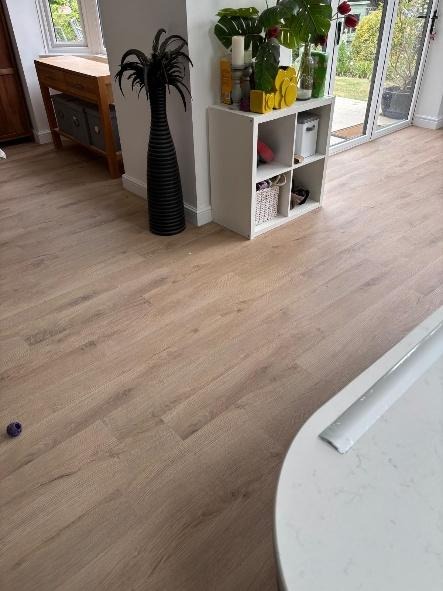
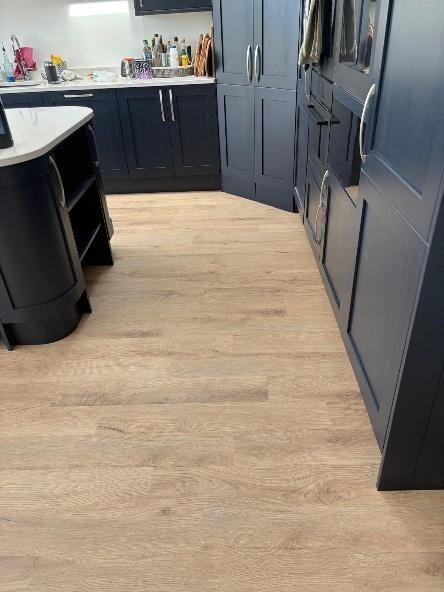
By identifying the lignite early, allowing the screed to dry, and using the correct F-Ball system to encapsulate and level the surface, we delivered a stable, long-lasting base for the LVT. The customer now has a high-quality, durable floor in their new kitchen/diner, with the subfloor properly prepared to perform for years to come.