
Luxury Vinyl Tile (LVT): A complete guide to choosing the right floor
Introduction
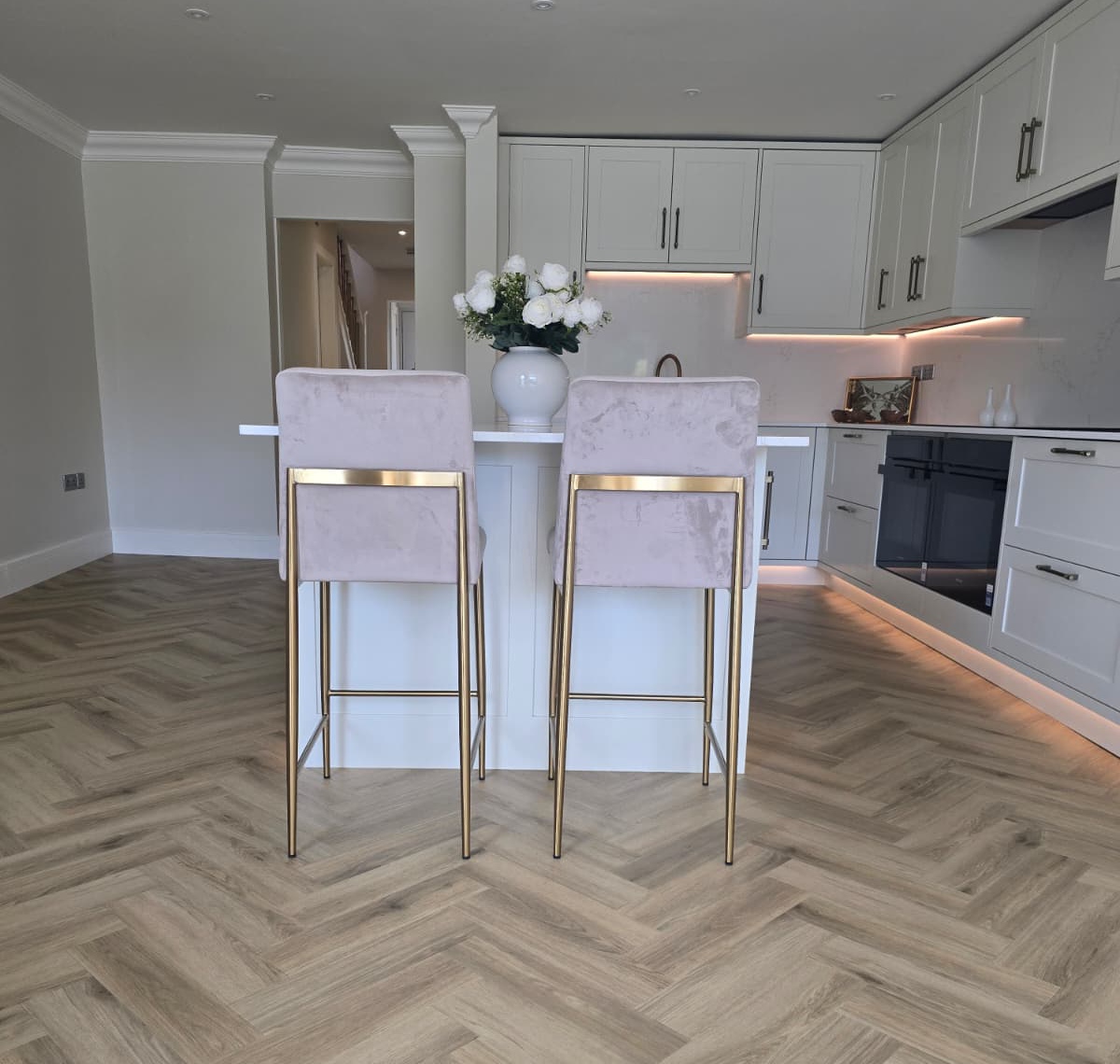
Luxury Vinyl Tile, better known as LVT, has become one of the UK’s most popular flooring choices, and for good reason. It offers the appearance of natural wood and stone while combining it with the practicality, durability and relatively easy maintenance that modern homes demand. But not all LVT is the same.
Different products vary in construction, wear layer, thickness, installation method, warranty, design and suitability for different environments therefore choosing the right LVT isn’t simply about finding a colour you like.
At Oxford City Flooring, we install LVT in homes and commercial environments across Oxfordshire, and we’re often asked the same questions: What is LVT? How durable is it? Is it waterproof? What’s the difference between glue-down and click? And what should I actually look for when choosing a product?
Here’s what you need to know.
What is Luxury Vinyl Tile (LVT)?
LVT is a multi-layered flooring product made primarily from vinyl. Modern manufacturing techniques allow it to mimic the appearance and texture of natural materials so realistically. Wood-effect LVT can replicate different timber species, grain patterns and colours, while stone-effect products can mimic materials such as limestone, slate and marble.
LVT is available in a wide range of formats, including:
- Wood-effect planks
- Stone-effect tiles
- Large-format tiles
- Herringbone
- Parquet
- Other bespoke, decorative laying patterns, depending on the product
This combination of appearance, practicality and design flexibility is a major reason for its popularity.
What’s inside an LVT floor?
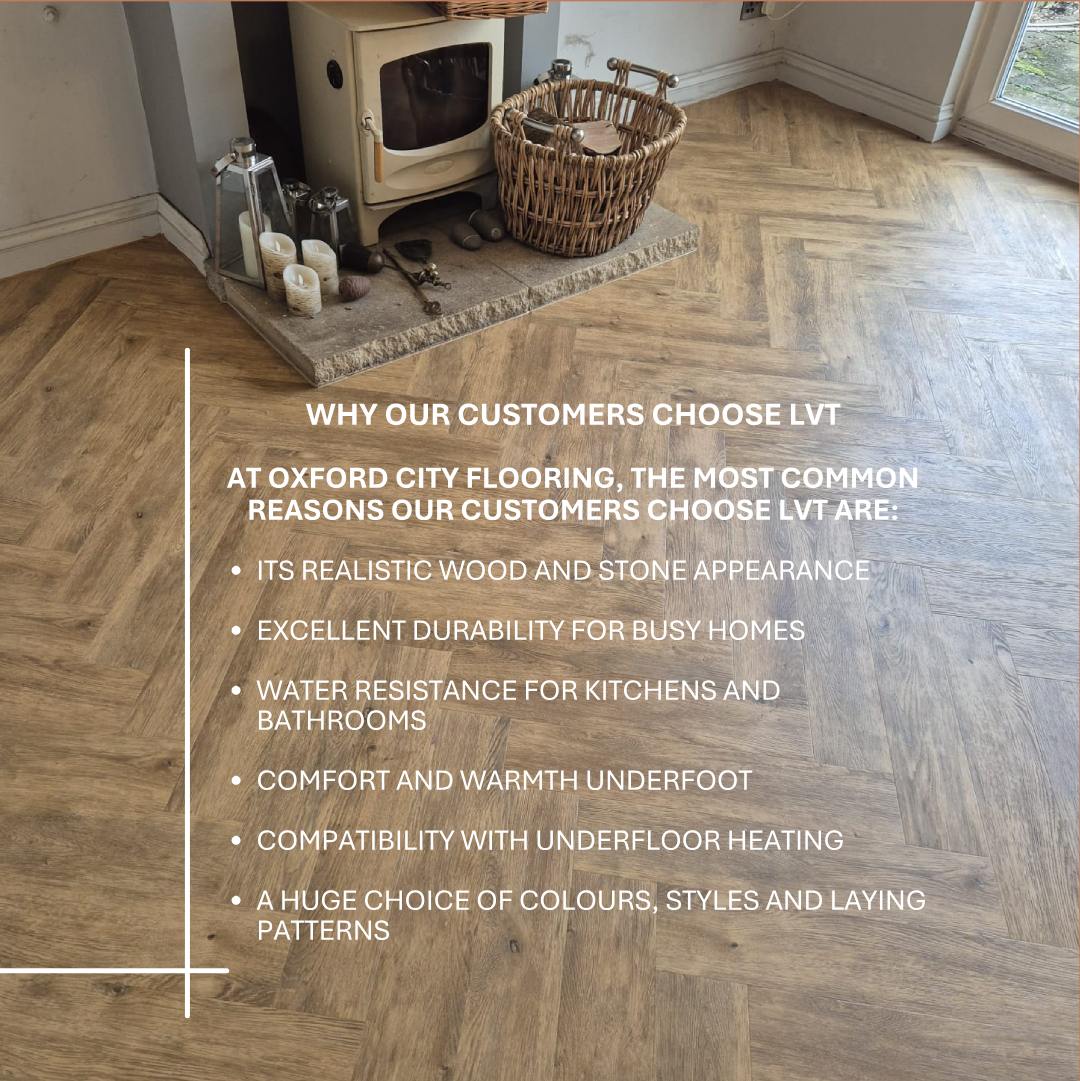
Although construction varies between manufacturers and collections, a typical LVT product consists of several layers.
1. The wear layer
The wear layer is the transparent protective surface of the flooring. It helps protect the decorative layer against everyday wear, scratches, scuffs and staining. Wear layers are specified in millimetres, with 0.3mm, 0.55mm and 0.7mm being common specifications.
As a general guide:
- 0.3mm – suitable for many lower-traffic domestic areas
- 0.55mm – a popular choice for busy family homes and many commercial environments
- 0.7mm – specified where flooring is subjected to particularly high levels of traffic
However, thicker doesn’t necessarily mean better. The overall construction, surface treatment, intended use and manufacturer’s specification are all important.
2. The design layer
Beneath the wear layer is the high-definition printed design that creates the appearance of wood, stone or another material. Many premium products also incorporate embossing or texture that follows the printed design, making the floor look and feel more realistic.
3. The vinyl core
The vinyl core forms the main body of the flooring, providing its structure, strength and dimensional stability. It also contributes to the slightly softer and more comfortable feel that LVT has underfoot compared with many traditional hard flooring products.
4. The backing layer
The backing layer forms the foundation of the plank or tile and provides additional support and stability. Depending on the manufacturer and product range, the backing can also contribute to the acoustic performance, comfort and the overall stability of the finished floor.
This multi-layer construction is one of the key differences between modern LVT and traditional vinyl flooring, giving LVT its blend of realistic appearance, durability, stability and everyday performance.
Is LVT waterproof?
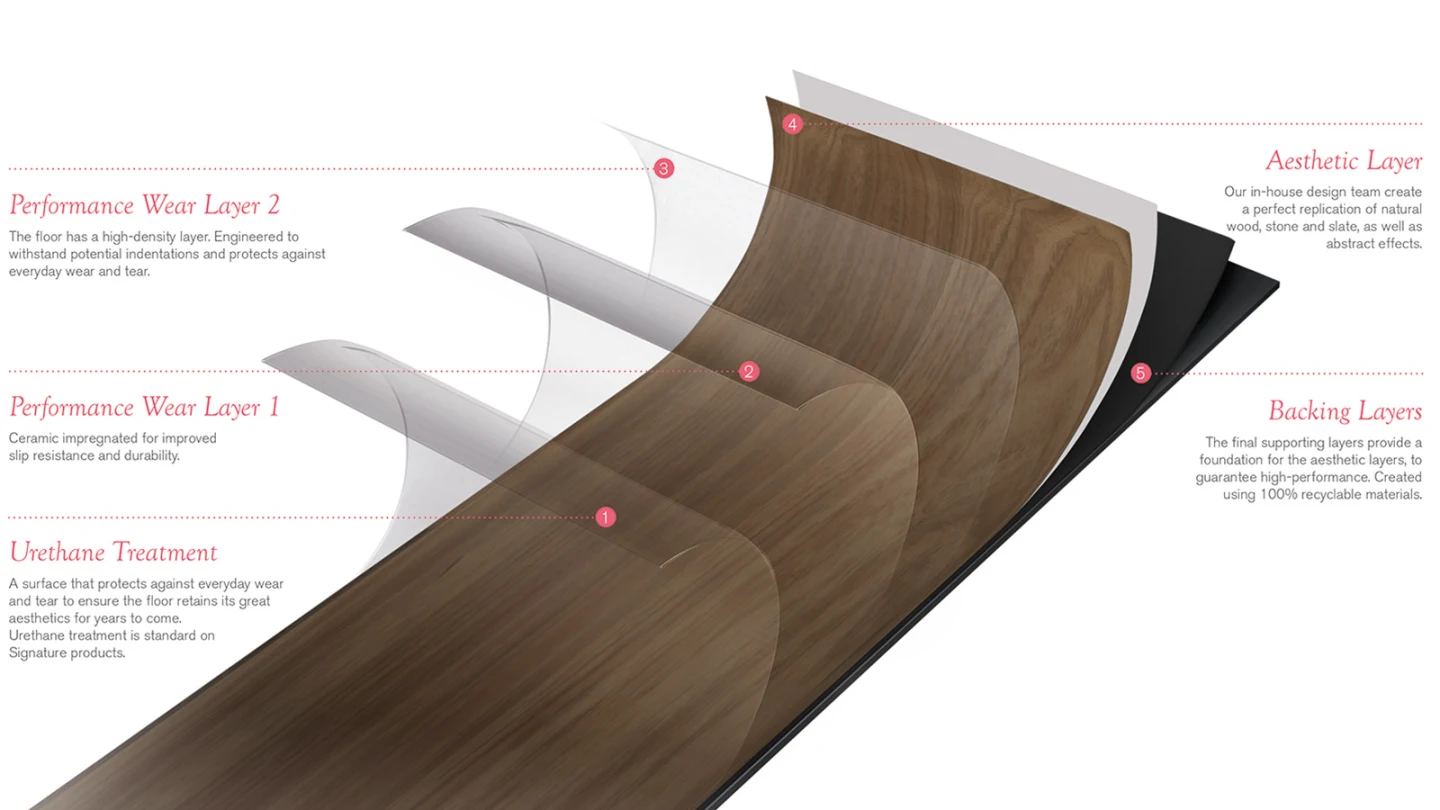
One of LVT’s major advantages is its resistance to water. Because LVT is made from vinyl rather than a wood-fibre core, the flooring itself won’t absorb water in the same way as timber or traditional laminate. This makes it particularly suitable for areas such as kitchen, bathrooms, utility rooms and hallways not excluding many commercial area’s too.
However, there’s an important distinction between water-resistant flooring and a completely waterproof installation. Joints, edges, perimeter details, the subfloor and the installation system all matter. Click LVT, for example, relies on properly manufactured and correctly installed joints. Always check the manufacturer’s specification when choosing flooring for areas exposed to significant moisture.
Glue-Down or Click LVT?
One of the most important decisions you’ll make.
Glue-down LVT
Glue-down LVT is bonded directly to a prepared subfloor using specialist adhesive.
It creates an extremely stable floor and is particularly well suited to:
- Large open-plan areas
- High-traffic environments
- Commercial properties
- Herringbone and parquet
- Intricate laying patterns
- Projects where long-term stability is important
From a fitter’s perspective, glue-down LVT is often the preferred installation system because of its stability, design flexibility and premium finish. The trade-off is that it requires considerably more preparation.
Click LVT
Click LVT uses an integrated locking system to create a floating floor. It can offer quicker installation and less disruption, making it particularly popular in domestic renovations. However, click LVT isn’t a shortcut around floor preparation. The subfloor still needs to be sufficiently flat, stable, dry and suitable for the particular product.
Neither system is universally better. The right choice depends on the room, the subfloor, the design, the product and how the floor will be used.
Why is subfloor preparation so important?
This is probably the part of an LVT installation that customers see the least, but it can be one of the most important. A beautiful floor cannot compensate for a poorly prepared subfloor.
Depending on the existing floor, preparation may involve:
- Removing old flooring and adhesive
- Moisture testing
- Repairing damaged areas
- Priming
- Applying a damp-proof membrane where required
- Applying smoothing compound
- Ensuring the finished surface is sufficiently flat and sound
This is particularly important with glue-down LVT because many products are relatively thin. Imperfections beneath the flooring can potentially show through or even be felt underfoot.
This is why professional LVT installation is about much more than simply laying the planks.
Can LVT be installed over existing flooring?
Sometimes, but never just assume it can. Whether existing flooring can remain depends on its condition, construction and the requirements of the new product. The existing surface needs to meet the manufacturer’s requirements for factors including:
- Flatness
- Stability
- Cleanliness
- Moisture
- Soundness
Some existing floor coverings will need to be removed completely. A professional assessment done before installation can prevent expensive problems later.
How durable is LVT?
Good-quality LVT is designed to cope with everyday life, but durability depends on more than the product simply being labelled “LVT”.
When selecting a floor, we consider:
- Wear layer
- Overall construction
- Intended use
- Traffic levels
- Installation system
- Subfloor preparation
- Maintenance
- Manufacturer’s specification
A floor for a quiet bedroom doesn’t necessarily need the same specification as one being installed in a busy family kitchen, school, care home or commercial building. That’s why we recommend choosing flooring according to how the space will actually be used.
Scratches, Scuffs and Indentation
It’s important to distinguish between wear resistance, scratch resistance and indentation resistance. They aren’t necessarily the same thing.
A floor can have a highly durable wear layer and still be scratched by grit, sharp objects or furniture being dragged across it. Equally, heavy furniture or concentrated loads can cause indentation even when the surface itself remains undamaged. Entrance matting, felt pads beneath furniture and sensible day-to-day care can make a significant difference to the appearance and lifespan of your floor. When choosing flooring for a busy home, we look beyond the headline wear rating and consider the product’s overall construction and intended use.
Is LVT suitable for families and pets?
For busy households, LVT can be an excellent choice. Its protective surface helps deal with everyday scratches, scuffs and spills, while its easy-clean construction makes it practical for homes with children and pets. However, no flooring is completely scratch-proof or indestructible. As per the above paragraph points out – grit, sharp objects, dragged furniture and concentrated loads can all cause damage over time. Good-quality mats and sensible furniture protection can make a surprisingly large difference.
How does LVT feel underfoot?
LVT generally feels softer and warmer underfoot than many traditional hard flooring products. It can also provide quieter performance than some alternatives, particularly when compared with harder surfaces. The exact feel depends on the product, installation method, subfloor and whether the flooring incorporates an acoustic backing.
It’s one of the reasons we encourage customers to see and feel flooring samples before deciding.
Is LVT suitable for underfloor heating?
Many LVT products are compatible with underfloor heating, but always check the manufacturer’s requirements.
Different products can have specific requirements relating to:
- Maximum surface temperatures
- Adhesives
- Installation
- Commissioning
- Temperature controls
When installed correctly, LVT can transfer heat efficiently and provide a comfortable finished surface.
How easy is LVT to maintain?
One of LVT’s biggest advantages is its relatively simple maintenance.
For everyday care:
- Sweep or vacuum regularly
- Damp mop when necessary
- Use an appropriate pH-neutral cleaner
- Wipe up spills promptly
- Use felt pads beneath furniture
- Use entrance mats to reduce grit and moisture
Unlike many natural timber floors, LVT doesn’t normally require sanding, sealing or oiling.
How long does LVT last?
There’s no single lifespan that applies to every LVT product. A good-quality LVT floor can provide many years of service, with some domestic products capable of lasting 15-25 years or more when correctly installed and maintained.
Commercial products can be designed for much higher levels of traffic.
Actual lifespan depends on:
- Product specification
- Wear layer
- Traffic
- Installation
- Subfloor preparation
- Maintenance
- Environment
The key is choosing a product that is appropriately specified for the space.
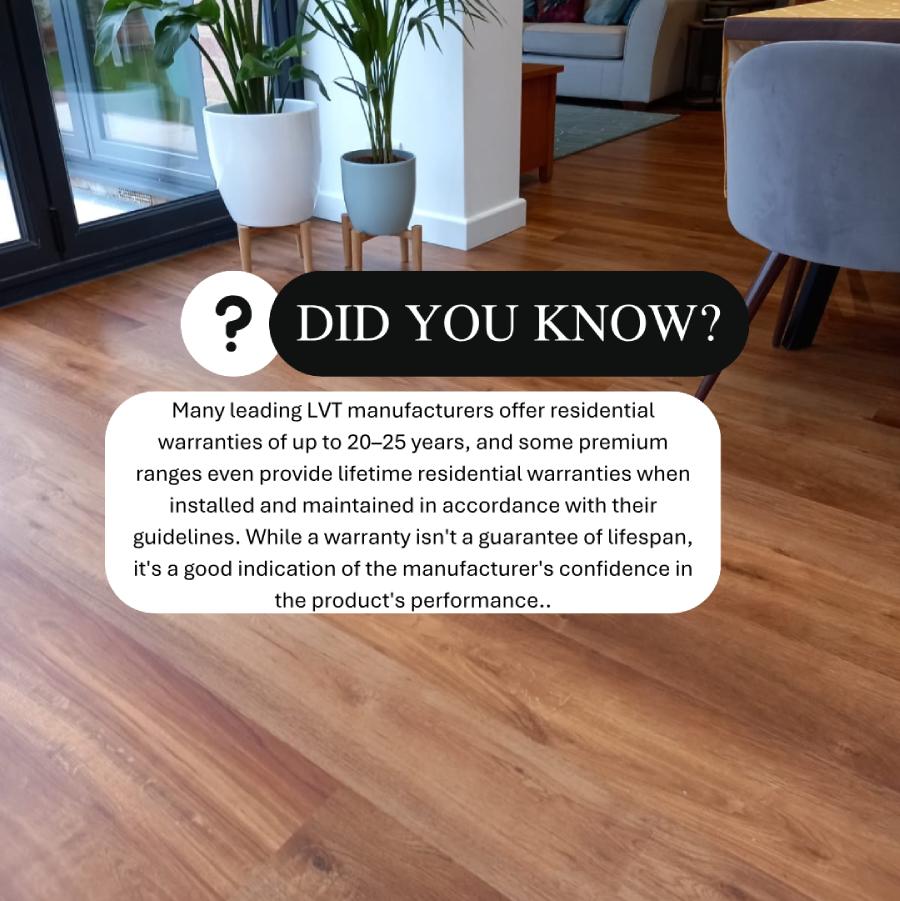
During the selection process, we also recommend checking the manufacturer’s warranty period for that particular collection. Warranty periods can vary considerably between products and are an important indication of the manufacturer’s intended performance and usage.
Why professional installation matters
It’s also worth considering who is installing your flooring. Where a manufacturer requires or recommends installation by an approved, accredited or certified installer, using one can provide additional reassurance and may be important if you ever need to make a warranty claim. Always check the manufacturer’s warranty terms and installation requirements before work begins.
What does LVT cost?
LVT prices vary considerably.
The cost depends on:
- Manufacturer and collection
- Wear layer
- Product construction
- Plank or tile size
- Laying pattern
- Installation method
- Subfloor preparation
- Room size
A simple click installation can be very different in price from a premium glue-down herringbone installation requiring extensive floor preparation. When comparing quotations, it’s therefore important to look at the complete installed cost, rather than simply comparing the price of the flooring itself. A cheaper product isn’t necessarily better value if it isn’t suitable for the environment or doesn’t provide the performance you need.
Which LVT manufacturers do we work with?
At Oxford City Flooring, we work with a carefully selected range of established flooring manufacturers, giving our customers access to a vast range of different styles, specifications and price points rather than limiting them to one particular brand.
Our LVT range includes products from: Amtico, Karndean, J2 Flooring, Textures Flooring, Harvey Maria, Brampton Chase and Moduleo. Each manufacturer has its own collections, designs, construction methods, wear-layer specifications and warranties, so there isn’t necessarily one brand that is right for every project.
That’s where professional advice can make a difference. Rather than choosing a floor based solely on its appearance, we’ll look at how the room will be used, the level of traffic, the installation method, the required performance and your budget before helping you select the most appropriate product. We are proud to work with manufacturers who support the trade and provide products that we can confidently recommend to our customers.
What do professional floor fitters look for?
After years of installing different types of flooring, we’ve learned that the best floor isn’t necessarily the most expensive one.
We look at the whole project. What is the room used for? How much traffic will it receive? Are there children or pets? Is moisture a concern? What condition is the existing subfloor? What design are you trying to achieve? And how long do you expect the flooring to last? Only then can we recommend the appropriate product and installation system.
So, is LVT the right flooring for you?
For many homes and businesses, the answer is yes. LVT can provide the appearance of natural wood or stone while offering excellent practicality, durability, comfort and design flexibility.
But choosing LVT is only the beginning.
The right product, wear layer, installation system and subfloor preparation all contribute to the finished result. There isn’t one LVT product that is perfect for every room. The best floor is the one that’s properly specified for your property, your lifestyle and your expectations.
Can Oxford City Flooring help?
Absolutely. At Oxford City Flooring, we’ll take the time to understand how you use your space before recommending a flooring solution. We’ll consider the existing subfloor, the demands of the room, your preferred design, your budget and the level of performance you require.
Whether you’re replacing the flooring in one room, renovating your entire home or specifying flooring for a commercial property, we can help you choose the right product and installation system. Visit our Didcot showroom to explore our range of LVT flooring or get in touch to arrange a free site visit for a quote.